Why the Camera Comes First
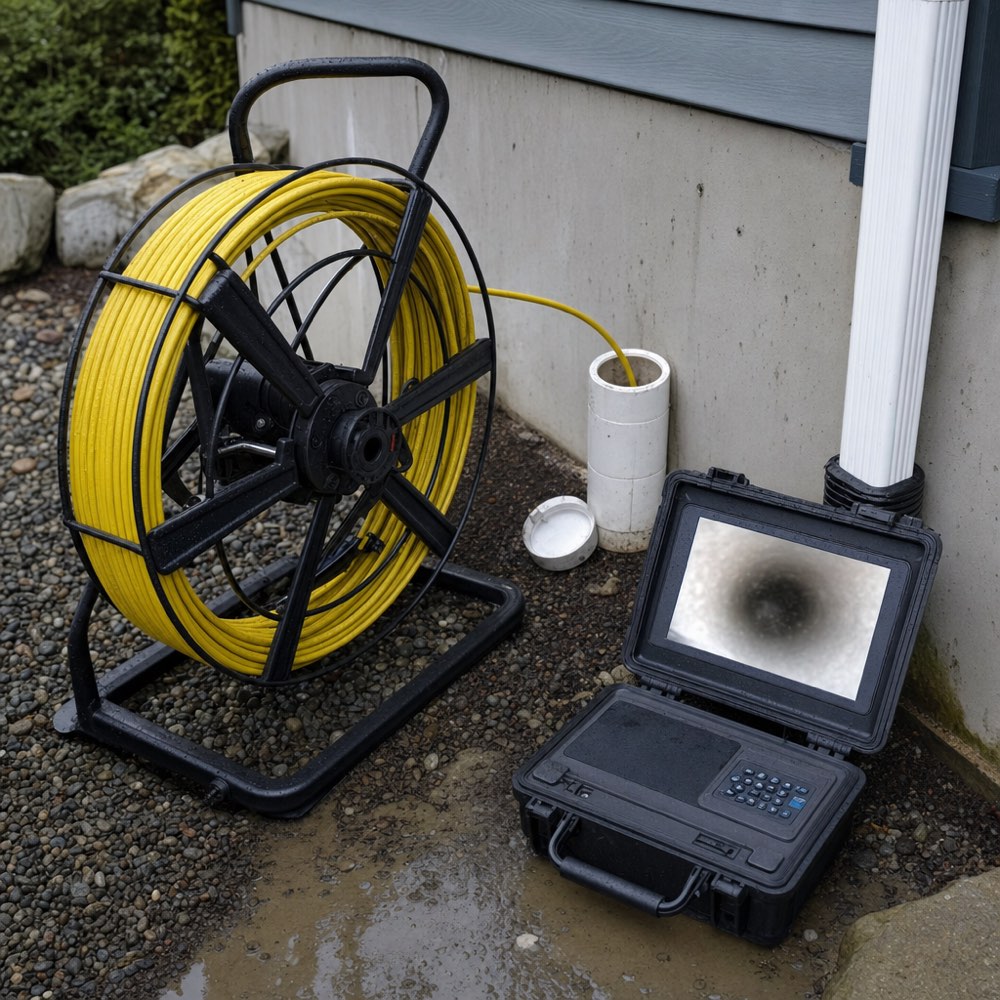
Your perimeter drains are buried up to two and a half metres underground, and everything anyone says about their condition without looking is a guess. A drain camera inspection replaces the guess: we feed a self-levelling video camera through the system from a cleanout or access point and record exactly what is there, silt depth, root intrusion, breaks, offsets, standing water and slope problems, each one located by distance from the access point.
That evidence protects your wallet in both directions. It stops you from paying for a full replacement when a flush would have fixed the problem, and it stops you from paying for flush after flush on a pipe that is structurally done. It also means any repair we do quote is targeted: dig here, this section, this length, rather than excavating on exploration.
When to Book an Inspection
Something is wrong and you want to know why
Wet basement corners, efflorescence blooming on the concrete, pooling against the foundation, a crawlspace that smells like a wet towel every November. These symptoms all say the soil around your footing is not draining, and the camera finds out why. In the Fraser Valley the answer is usually one of four things: silted clay tile, root intrusion (cedar hedges are the local champion), a crushed section, or downspouts overwhelming a system that was never separated from roof water.
You are buying an older home
This is the inspection most Fraser Valley buyers skip and should not. Standard home inspections stop at the walls; nobody looks underground. On a pre-1980 home in Abbotsford, Mission, Chilliwack or Langley, the perimeter drains may be original clay tile at the end of their life, and the difference between working drains and failed drains is a five-figure line item that belongs in your negotiation, not in your first winter as an owner. A pre-purchase camera inspection during the subject period costs a few hundred dollars and produces recorded footage your realtor can put to work.
You want a baseline before storm season
If your home is more than thirty years old and no one has ever looked at the drains, an inspection in late summer tells you whether you can relax through the atmospheric river season or whether you have work to schedule while the weather is still dry.
What We Inspect
- Perimeter (footing) drains around the foundation
- Downspout and roof water lines, and where they discharge
- Storm service connections to the municipal system
- Sump pits, catch basins and yard drainage lines
- Suspected problem areas flagged by wet spots, settling or plant growth patterns
How the Inspection Works
- Access. We use existing cleanouts, catch basins or downspout tie-ins. If an older system has no access, we create a small permanent cleanout, which future maintenance will thank you for.
- Recorded camera survey. The camera travels each run while we watch live. You are welcome to watch with us; most homeowners find it fascinating and slightly alarming.
- Location marking. Problems are located by distance and, where useful, by surface locating, so a repair can be a two-metre dig instead of a full trench.
- Findings on site, report after. We explain what we found before we leave and follow up with footage and a written summary that leads with the conclusion: what the system needs, what it costs, and what can wait.
Reading the Footage Honestly
Camera footage is powerful, and it deserves honest interpretation. Silt in the bottom third of an otherwise sound pipe is normal aging, not an emergency. Hairline root intrusion is a maintenance item, not a replacement trigger. What earns a replacement recommendation is structural failure: crushed or collapsed sections, joints offset far enough to dam flow, long back-sloped runs holding standing water, or clay tile so degraded it crumbles as the camera passes. We show you the difference on screen, because you should understand your own drainage well enough to know why the recommendation is what it is.
Every inspection ends with the same three-way answer, backed by footage: the system is healthy, the system needs cleaning, or the system, or part of it, needs replacement. Whichever it is, you decide with evidence in hand.
Frequently Asked Questions
How much does a drain camera inspection cost in the Fraser Valley?
A typical perimeter drain camera inspection runs in the $300 to $600 range depending on the size of the system and how easy it is to access. If the inspection leads directly to flushing or repair work with us, we credit some or all of the inspection cost toward the job. You will know the exact price before we arrive.
Should I get a drain inspection before buying an older home?
Yes, and ideally during your subject-removal period. On a pre-1980 Fraser Valley home the perimeter drains are one of the largest invisible liabilities in the purchase, potentially a $15,000 to $30,000 replacement that no standard home inspection looks at. A camera inspection turns that unknown into evidence you can negotiate with, or walk away from.
How long does a camera inspection take?
Most residential inspections take one to two hours on site. Systems with good cleanout access go faster. If we need to create an access point on an old clay system, allow an extra hour. You get the findings explained on site the same day, with recorded footage and a written summary to follow.
Can a camera inspect old clay tile drains?
Yes. Clay tile systems are exactly where inspections matter most, because their condition varies enormously from house to house. The camera travels through the tile the same way it travels through modern pipe, showing joints, offsets, root intrusion, silt levels and any collapsed sections, along with how far from the access point each problem sits.
What will the inspection actually tell me?
The first sentence of our report answers the question you actually have: does this system work, and if not, why not. Behind that, the footage documents pipe material, silt depth, root intrusion, breaks, offsets and slope problems, each located by distance so any repair can be targeted rather than exploratory.