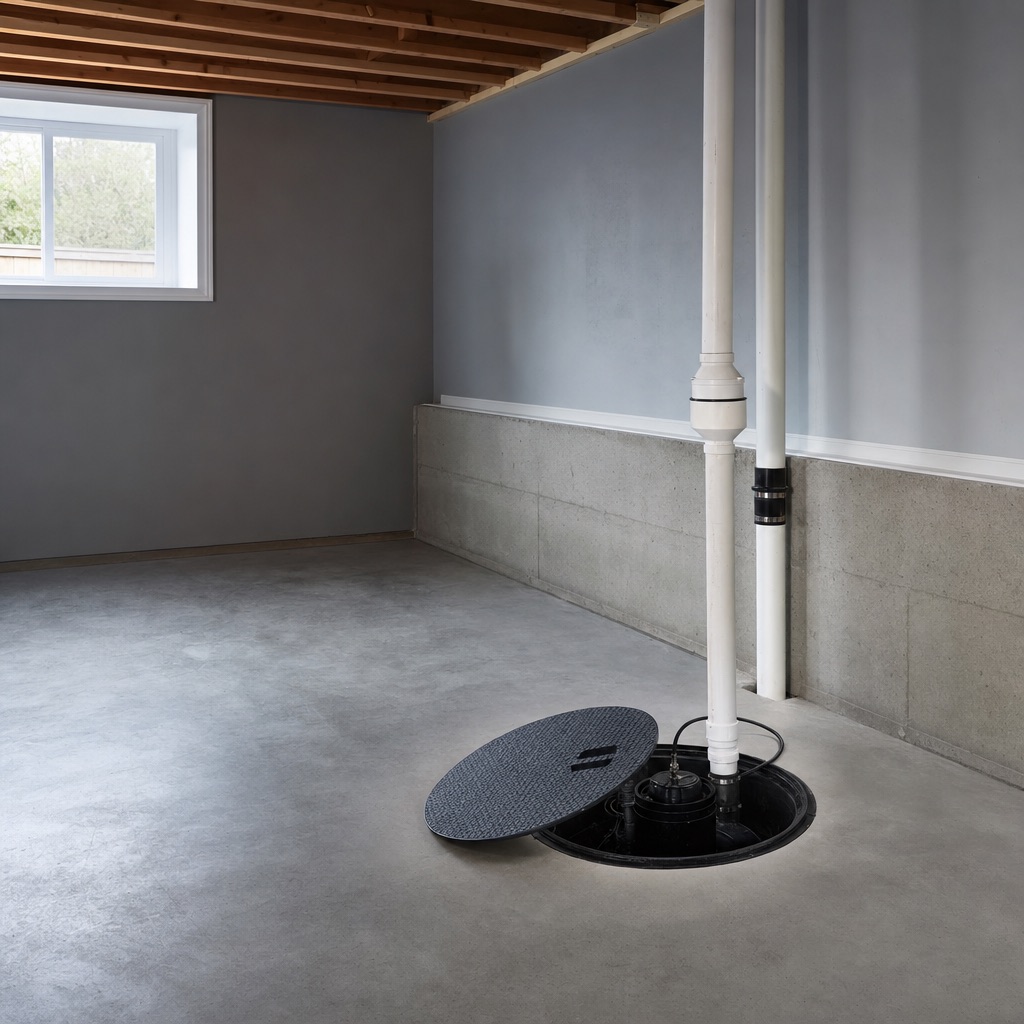
Why the Fraser Valley Floor Needs Pumps
Large parts of the Fraser Valley, the Matsqui and Sumas Prairie flats, Chilliwack's Sardis and Greendale areas, the low land along the Nicomekl and Salmon rivers in Langley, sit on former floodplain with a water table that rises close to the surface every winter. When weeks of rain stack on top of that, groundwater does not just flow toward your foundation, it rises underneath it. Perimeter drains collect that water, but collection only helps if the water then has somewhere lower to go.
On sloped lots, gravity provides the somewhere. On flat lots, or where the municipal storm connection is shallower than your footing, it cannot. That is the job of a sump system: a pit that gives water a low point to gather, and a pump that lifts it up and out to a discharge point where it cannot come back. For many valley-floor homes, a sump pump is not an accessory, it is the component that makes the whole drainage system work.
Signs a Sump System Belongs in Your Home
- Water appears in the basement or crawlspace during long wet stretches, not just single storms
- Your crawlspace holds standing water or stays saturated all winter
- Your lot is flat, or lower than the street and surrounding properties
- Perimeter drains were inspected and are intact, yet the basement still gets damp
- Neighbours on your street already run sump pumps all winter
- An existing pump is aging, undersized, or has no backup
What a Proper Installation Includes
- Assessment first. We confirm the water is groundwater rather than a fixable drainage fault. If a camera inspection shows your perimeter drains are blocked, or your downspouts are dumping roof water beside the footing, we fix causes before selling you a pump to fight symptoms.
- Pit placement and installation. The pit goes at the low point of the system, in the crawlspace, basement floor or exterior, sized to give the pump a sensible duty cycle rather than rapid-fire short cycling.
- Quality primary pump. We size the pump to the inflow and lift height of your property. Undersized pumps run continuously and die young; oversized pumps short-cycle. Sizing is the difference between a system and a gadget.
- Check valve and discharge line. A check valve stops pumped water from falling back into the pit, and the discharge line carries water to the storm connection or an approved discharge point, routed and sloped so it cannot freeze solid in a cold snap or recycle water back to the foundation.
- Battery backup where it counts. Valley storm fronts knock out power, and a sump pump without power is a plastic bucket. A battery backup pump with an alarm keeps the pit down through an outage and tells you the primary needs attention.
- Testing. We fill the pit and run the full system, primary, backup and alarm, before we call it done, and we show you how to test it yourself each fall.
Insurance, Prevention and the Math
Here is the uncomfortable fact that makes sump pumps an easy decision on high water table lots: most BC home insurance policies exclude damage from groundwater seeping or rising into the home. The flood that arrives through the soil, exactly the flood a sump pump prevents, is commonly the one you would pay for yourself. Set a $3,000 to $6,000 installed system against an uninsured basement restoration, easily tens of thousands once flooring, drywall and contents are counted, and the pump is the cheapest insurance you can actually buy.
Some insurers also look more favourably on homes with maintained sump systems and backups when pricing optional water coverage. Ask your broker; bring photos of your installation.
Already Have a Pump? Maintain It Like It Matters
A sump pump is the only mechanical device in your house whose failure mode is a flooded basement, and it fails silently. Ours get tested before we leave, but every pump owner should lift the float valve each fall, confirm the discharge is clear and actually expelling water outside, and listen for grinding or rapid cycling. If your pump is approaching ten years old, replace it on your schedule rather than during the February storm that finds it out. We service and replace existing pumps across the valley, including systems other companies installed.
Frequently Asked Questions
How much does sump pump installation cost in the Fraser Valley?
A typical complete installation, meaning the pit, a quality primary pump, check valve, discharge line and electrical connection, runs in the range of $2,500 to $6,000 depending on access, discharge routing and whether concrete cutting is needed for an interior pit. Adding battery backup typically adds $1,000 to $2,500. Firm quotes come after a site visit.
Do I need a sump pump if I have perimeter drains?
Only if gravity cannot carry your drain water away. On sloped lots with a storm connection below footing level, perimeter drains discharge by gravity and no pump is needed. On flat valley-floor lots, or where the municipal storm connection sits higher than your footing, a sump pit and pump are what lift the water out. A site assessment and camera inspection settle the question.
What happens to my sump pump when the power goes out?
Without backup, it stops, and power outages in the Fraser Valley tend to arrive with exactly the storms that produce the most water. That is why we recommend battery backup pumps for any home where a stopped pump means a wet basement. A backup system runs for hours of continuous pumping and alerts you that the primary has stopped.
How long do sump pumps last?
A quality cast iron primary pump typically lasts seven to ten years in normal service, less if it runs constantly in a very high water table. The pit and discharge plumbing last far longer. We recommend testing your pump every fall before storm season by lifting the float, and replacing pumps proactively once they are approaching a decade old.
Where does the sump pump discharge the water?
Preferably to the municipal storm system where a connection is available and permitted. Otherwise to a suitable discharge point on the property, well away from the foundation and from your neighbour, positioned so the water cannot simply circle back to the footing. Municipal rules differ between Abbotsford, Chilliwack, Mission and Langley, and we handle the routing to suit.
My crawlspace floods every winter. Is a sump pump the fix?
Frequently, yes. Crawlspace flooding on the valley floor is usually a high water table problem, and a properly placed sump pit with a reliable pump keeps the space dry through the winter. We pair it with a vapour barrier where needed and check that perimeter drains and downspouts are not dumping extra water under the house first.