What Perimeter Drain Replacement Involves
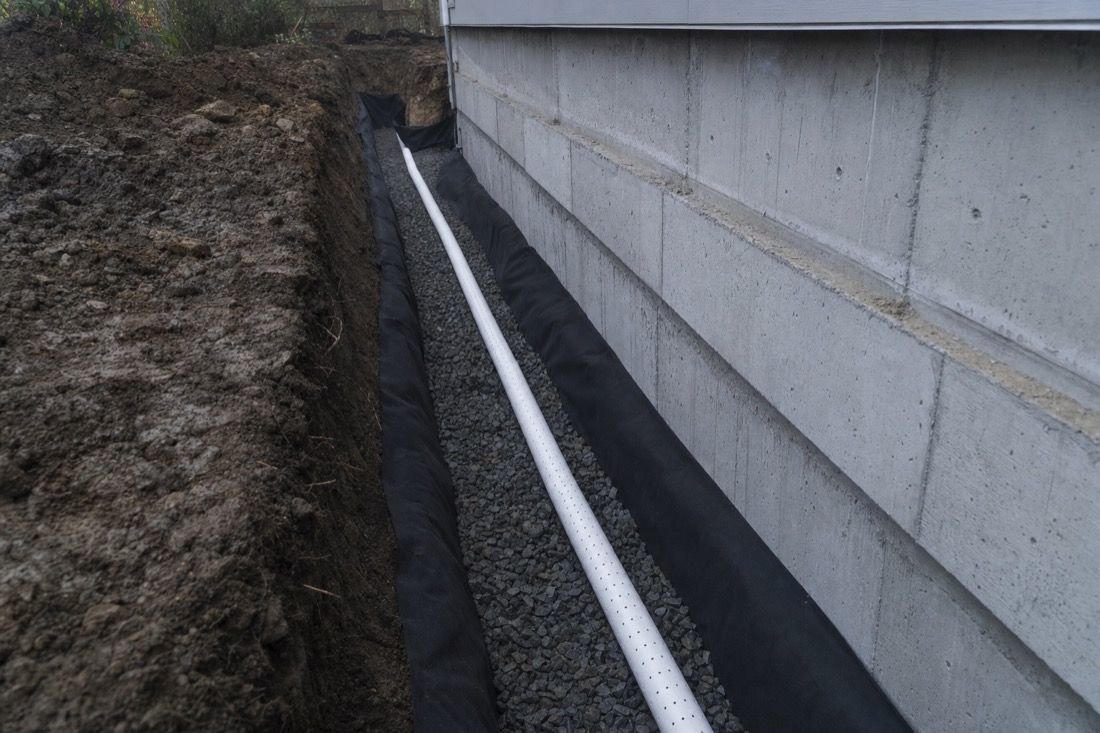
Perimeter drain replacement means excavating down to the footing of your foundation, removing the old failed drain, and installing a new system: rigid perforated PVC pipe laid on grade beside the footing, surrounded by clean drain rock, wrapped in filter fabric to keep silt out, and connected to a proper discharge point with accessible cleanouts at the corners. Done right, it is a once-in-a-lifetime job for the house. Done wrong, it is an expensive way to keep the same problem.
It is the biggest job in residential drainage, which is exactly why we never quote it from the sidewalk. Every replacement we recommend starts with a drain camera inspection so you can see for yourself that the existing system is beyond saving. If flushing would fix it, we tell you that instead, because a flushing customer who trusts us is worth more than one oversold excavation.
Why Fraser Valley Drains Fail
Most homes in Abbotsford, Chilliwack, Mission and Langley built before about 1980 were drained with clay tile: short ceramic pipe sections butted end to end around the footing, sometimes with tar paper laid over the joints. The design worked by accident as much as by intention. Every joint is an opening, and after decades in the ground three things happen:
- Silt infiltration. Fine valley silt washes in at every joint and settles in the pipe. Over the years the pipe becomes a packed tube of mud that carries no water at all.
- Root invasion. Cedar hedges, maples and ornamental trees planted close to the house send roots straight to the wettest thing in the yard. Roots enter at the joints and grow into dense mats.
- Physical collapse. Clay tile is brittle. Soil movement, vehicle loads, additions and even old repair work crush sections, and a single crushed section dams the entire loop.
Some older valley homes have no perimeter drainage at all, particularly early farmhouses and cottages. On those, winter after winter of saturated soil pushes water through cold joints and cracks, and the only real fix is installing a system where none existed.
How We Replace a Perimeter Drain
- Camera and site assessment. We confirm the failure, locate the existing discharge point, check lot grades, and identify anything in the dig path: gas, water, irrigation, decks, concrete.
- Firm written quote. Scope, price, timeline, what happens to landscaping, and what goes back when we are done. No per-metre surprises after the trench is open.
- Excavation to the footing. Machine where access allows, hand digging where it does not. The trench exposes the foundation wall down to the footing, typically 1.5 to 2.5 metres deep on a full basement.
- Foundation check while it is open. With the wall exposed once in fifty years, this is the moment to deal with cracks and coatings. Many customers add foundation waterproofing here for a fraction of what a standalone dig would cost.
- New system installed. Perforated PVC on consistent slope, clean drain rock, filter fabric, cleanouts at corners, and tie-ins for downspouts kept separate from the footing drain so roof grit never fouls the new pipe.
- Discharge and testing. Connection to the municipal storm service, or a sump pump where gravity cannot do the job. We run water through the completed system and show you flow at the discharge before backfill.
- Backfill and cleanup. Compacted backfill, rough grading sloped away from the house, surfaces restored as quoted.
Replace or Flush? The Honest Decision
The decision rests on what the camera shows. Silt and roots in an otherwise intact pipe: flush it, and budget for periodic maintenance flushing. Crushed sections, back-sloped runs, offset joints you could park a root ball in, or clay tile that collapses as the flush head passes: replacement is the only fix that lasts. We put the footage in front of you and walk through it, because you should never approve a five-figure excavation on someone's word alone.
One more honest note: if your home is on the market or you are buying an older home, a documented camera inspection with a replacement quote is powerful negotiating information. Buyers of pre-1980 valley homes increasingly ask about perimeter drains, and a seller who can show a recent replacement has removed one of the biggest question marks an older home carries.
What You Get When It Is Done
- Perforated PVC footing drain on proper slope, rock and filter fabric throughout
- Cleanouts at accessible corners so future flushing takes an hour, not an excavator
- Separated roof water and footing water so silt from the gutters never plugs the new drain
- A tested discharge, by gravity or pump, proven with water before backfill
- Grading sloped away from the foundation
- Photos of the open trench and completed system for your records and any future sale
Frequently Asked Questions
How much does perimeter drain replacement cost in the Fraser Valley?
A full perimeter drain replacement on a typical Fraser Valley home usually runs somewhere between fifteen and thirty thousand dollars, depending on the length of the run, depth of the footing, access for machines, and what surfaces (concrete, decks, landscaping) have to come out and go back. Partial replacements of one failed side can be much less. We camera the system first and give a firm written quote before any excavation.
How long does a perimeter drain replacement take?
Most full replacements take about one to two weeks from first dig to final cleanup. A single wall or partial replacement can be done in a few days. Weather matters less than people expect once the trench is open, but we prefer to schedule major excavation in the drier months so the trench stays stable and the yard recovers faster.
Can you replace only the failed section instead of the whole system?
Sometimes, yes. If the camera shows one crushed or root-choked run and the rest of the system is sound, a sectional repair is a legitimate option and we will quote it. But if the system is clay tile throughout, failures tend to keep coming, so we will give you an honest comparison of repairing one side now versus replacing the whole loop once.
Will replacement wreck my landscaping?
The trench has to follow the foundation, so plants, paths and decks within about a metre of the house are affected. We plan access before we start, save what can be saved, and backfill and rough-grade when we are done. Hard structures like concrete patios and driveways over the drain line add cost because they must be cut and patched, and we itemize that in the quote.
Do new perimeter drains come with a sump pump?
Only when the property needs one. If your lot has good fall to the municipal storm connection, gravity does the work. On flat valley-floor lots or where the storm connection is higher than the footing, we add a sump pit and pump so the system can discharge reliably. The camera inspection and a look at your lot grades tell us which situation you are in.
What is the difference between clay tile and modern PVC perimeter drains?
Clay tile drains are short ceramic pipes laid end to end with open joints that collect water but also let in silt and roots, and they crush easily. Modern systems use rigid perforated PVC surrounded by clean drain rock and wrapped in filter fabric, with sealed glued joints, proper slope, and cleanouts so the system can be flushed and inspected for decades to come.